
Feelings Aren't Facts Part 1
Amy Bonaduce-Gardner | JUL 5, 2024

Hello friend,
Emotions. Where do they come from? Why do we have them? All great questions. But let’s start with how we know them.
In science, an emotion is defined as a significant physiological event in the body. The sensation we understand as feeling. The experience of our feeling is often labeled as our mood. Emotion depends on this arousal.
Just as we learn to label colors based on examples, we categorize emotions into constructs like “happy,” “sad,” or “surprised.” Emotions are also subjective experiences, influenced by our unique backgrounds, memories, and cultural context. (Exception - my husband’s labels for blue & green are wrong. Mine are right.)
Our brains predict emotion by comparing current experiences to past ones. These predictions occur even before the associated physiological changes (chemical events) reach our conscious awareness. This happens both in the parasympathetic and sympathetic nervous systems.
Emotions are a prescription for action. The parasympathetic nervous system triggers actions based on our emotional predictions. We observe how closely our actions align with our intentions, either confirming my prediction or refining our predictions for current understanding and future predictive efficiency.
When I compare my prediction to reality and understand (unconsciously) the uniqueness of the experience, I also experience emotional granularity. Emotional granularity refers to the subtle variations within broader emotional categories. Like different types of rain in Oregon or various words for snow in Eskimo languages, emotions come in shades and nuances.
The sympathetic brain compares my current experience with what most closely matches constructs I learned from my past. It looks for sameness. This provides me with a label and summary for my perceived experience. If that summary turns out not to be true, I start the process over or I create a story to make meaning of the situation. This means I go beyond the information given, often weaving cultural context into our interpretations.
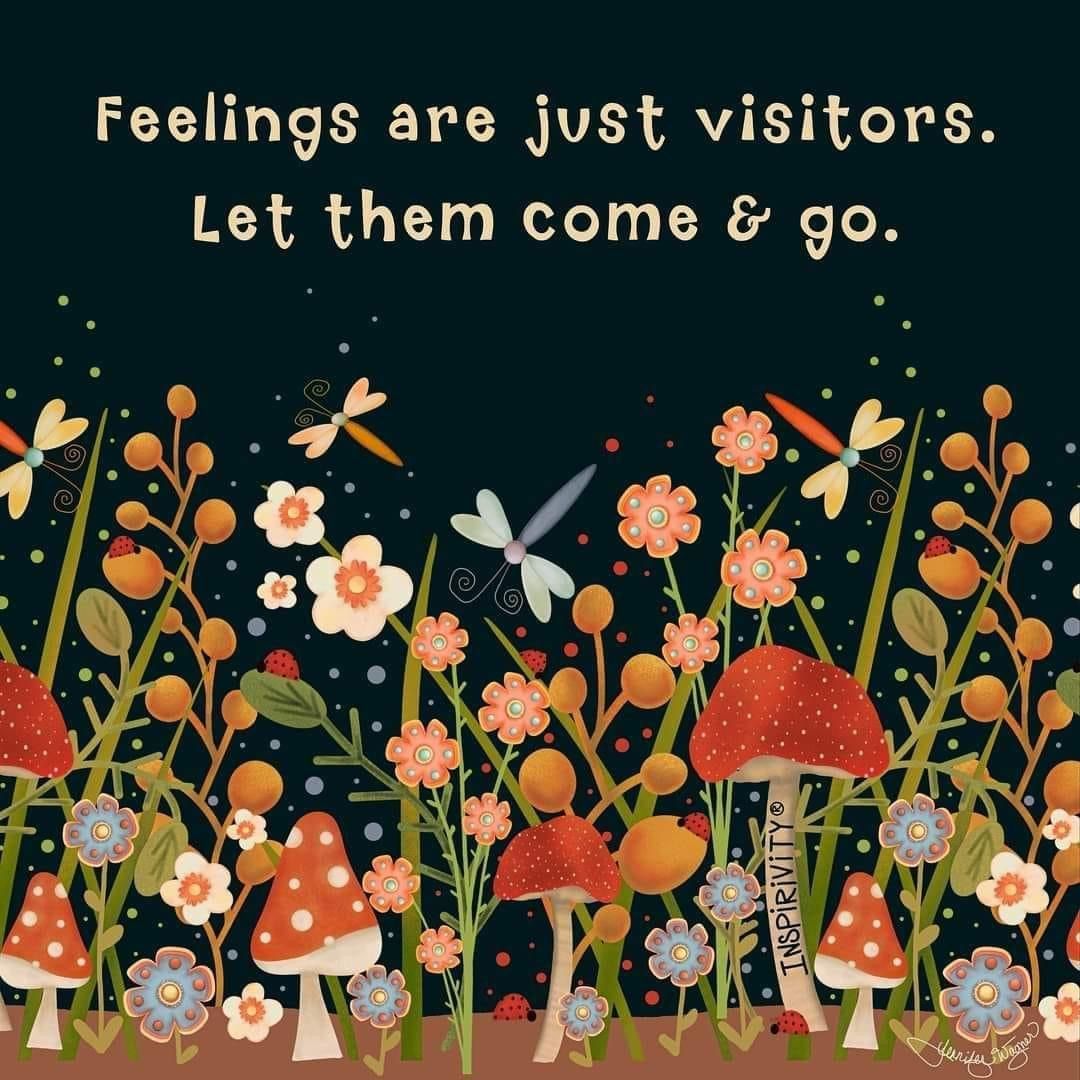
Consider this: Fear is a feeling intended to generate the actions of fear: fight, flight and freeze. If you’re trembling with fear, your brain may interpret this as fear itself. But what if there is nothing in my environment requiring the action of fear and yet I experience fear?
Lastly, the existence of emotions is intricately tied to perception. Colors need eyes to see them and sounds need ears to hear them. Do emotions exist if there is no one to perceive them?
A fantastic book for a deeper dive into emotion: How Emotions Are Made by Lisa Feldman Barrett
Onwards, Amy
Content is for entertainment and educational purposes only. It is not medical advice or a replacement for therapy. Links are for convenience; however, a small commission is sometimes earned from purchases.
Amy Bonaduce-Gardner | JUL 5, 2024
Share this blog post



© 2026 Prism Movement Studio